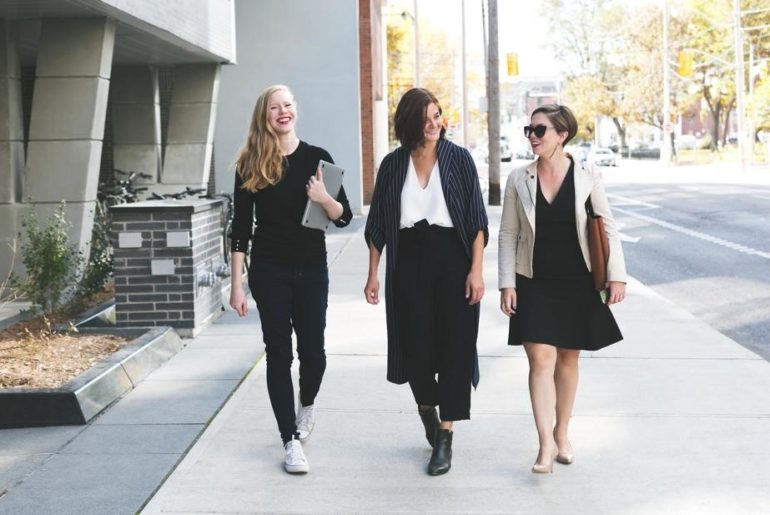
Are you interested in becoming a workplace champion? Maybe you are looking for someone to assume this role in your workplace but you are unsure where to start. You might ask yourself what makes a ‘good’ workplace champion? Previous research suggests that the most effective workplace champions are those who have a genuine passion for health and wellbeing and are enthusiastic about the opportunity to inspire others towards a healthier lifestyle (Healy et al., 2018). They must also be committed to making long-term positive health changes in their workplace and display a good relationship with their peers. It could be someone that has, or is eager to gain, some experience in managing similar projects. Health and safety representatives are often chosen for this position because it coincides with their goals, namely to create a safer, healthier workplace. However, we must also consider the individual’s capacity to adopt this role. Do they have the time and resources to engage fully with the program within the confines of their own job? Or will it fall into their periphery? These are just a few of the things that must be considered before electing a workplace champion. More general personality traits like outgoingness and…

Forget Standing Desks: To Stay Healthy, You’ve Got To Move All Day
The following article, written by Christopher Keyes, was published by The Guardian on February 6th, 2019. If you want to dedicate yourself to a lifetime of good habits, don’t start at the gym. Start at the office. A few years ago, James Levine, a doctor of endocrinology at the Mayo Clinic, sparked a radical change in America’s office furniture. His research had inspired a pile of viral stories cataloging the negative effects of sitting at a desk: leg muscles shut down, blood pressure increases, good cholesterol plummets, your children starve. OK, I made up that last one, but the real takeaway was no less dire. “Excessive sitting is a lethal activity,” Levine, who has studied sedentary behavior for nearly 20 years and is the most widely quoted expert on the topic, told the New York Times in 2011. And the solution – at least the one people heard – was to start standing. Cue the office makeovers. Over the next several years, workers all across America embraced stand-up desks. At Outside’s headquarters in Santa Fe, New Mexico, our building manager furiously reconfigured work spaces. Desks were removed from their shelving brackets, raised a foot and a half, and remounted. Walking the hallways,…
A little about the UQ BeUpstanding™ team!
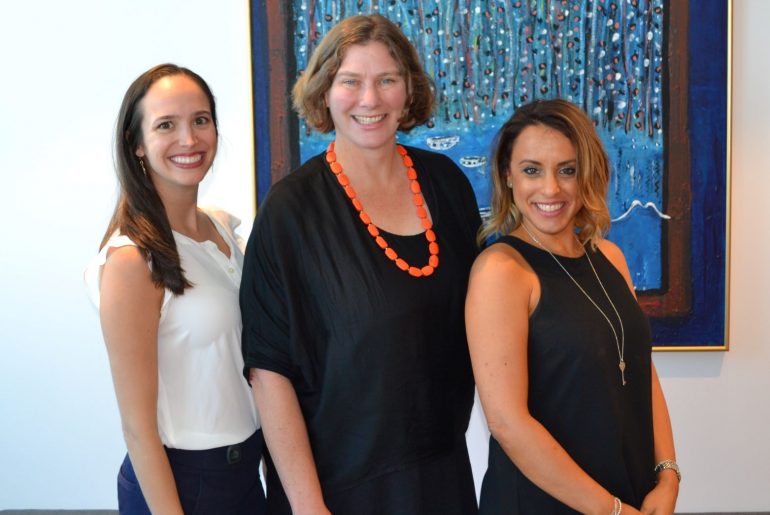
WayAhead Workplaces recently featured us on their website! If you want to learn a little more about the UQ BeUpstanding team, click here, or read on below. NAME The BeUpstanding™ Team A/Prof Genevieve Healy, Dr Ana Goode, Jennifer Burzic JOB TITLES Genevieve: Principal Research Fellow Ana: Research Fellow Jen: Research Assistant ORGANISATION The University of Queensland, School of Public Health, Cancer Prevention Research Centre WHAT ARE YOU/YOUR ORGANISATION CURRENTLY FOCUSSING ON IN TERMS OF WORKPLACE HEALTH AND WELLBEING? Here at The University of Queensland, we have been focussing on enhancing our BeUpstanding™ program (www.beupstanding.com.au): a free, evidence-informed online program designed to support workplace champions make sitting less and moving more the new norm in their work team. We received NHMRC (National Health and Medical Research Council) funding for a national implementation trial and have been working closely with our amazing partners; Comcare, Safe Work Australia, Office of Industrial Relations QLD, VicHealth and Cancer Council WA/ Healthy Workplaces WA building towards a national launch in 2019. WHAT ASPECT OF WORKPLACE HEALTH AND WELLBEING DOES YOUR ORGANISATION DO WELL IN? We are very lucky that The University of Queensland offers a lot of great health and wellbeing programs including the UQ wellness program, Bupa services…
Discovery Interviews: What are they, why we are doing them, and what have we found?
The BeUpstanding™ team have recently been out and about talking to and interviewing champions, potential champions, teams, and workplaces about their experience of taking part in BeUpstanding. Today we are going to take a look at what discovery interviews are, what they are used for, and why we are doing them. Most importantly we are going to share some of the interesting things that we found. What are discovery interviews? Discovery interviews have one main purpose – and that is for the researcher (or product development team) to understand how the end user is actually using a product. In our case, they are giving us insights into why organisations and champions are taking up BeUpstanding, or why they might consider taking it up, as well as the barriers and facilitators to success. In this round of interviews, our discovery process has involved in-depth interviews with government departments, mining, and fast moving consumer goods (FMCG) companies, as well as on-site observations of work teams, both before and after putting BeUpstanding into practice. Over the past several months we have conducted numerous interviews. We deliberately chose teams with varying levels of engagement with BeUpstanding. We interviewed teams that were actively using the…
What is the link between Stress, Team Cohesion, and BeUpstanding™?
At team BeUpstanding™, we are not only interested in how our program impacts on raising awareness, building culture, and changing behaviour to support workers to stand up, sit less, and move more, but also on its broader impact on health, productivity and wellbeing. The following blog is written by Jemieca Loeffler who undertook her honours with the BeUpstanding™ team here at the University of Queensland. She worked with some of our amazing champions and teams taking part in BeUpstanding™ to find out in a bit more detail if there was any impact of the program on occupational stress and group cohesion. What she found was that the more stressed employees were and the more cohesive they felt with their team, the less time they spent sitting at work and the more likely they were to engage in BeUpstanding™. Sound interesting? Read below to find out more! Some background info As we know, prolonged sitting can be detrimental for our health, and many of us fall victim to this public health concern through our jobs. A study by Thorpe et al. showed that call centre workers, in particular, are at highest risk of sedentariness, spending up to 90% of their work day sitting,…
US Physical Activity Guidelines (2nd Edition) Now Available
Have you heard? The U.S. Department of Health and Human services (USDHHS) recently released the updated guidelines on physical activity. As first reported by the USDHHS, here are the “Top 10 Things to Know About the Second Edition of the Physical Activity Guidelines for Americans” (psst make sure you check out #6). The second edition of the Physical Activity Guidelines for Americans provides evidence-based recommendations for adults and youth ages 3 through 17 to safely get the physical activity they need to stay healthy. There are new key guidelines for children ages 3 through 5 and updated guidelines for youth ages 6 through 17, adults, older adults, women during pregnancy and the postpartum period, adults with chronic health conditions, and adults with disabilities. The new key guidelines for children ages 3 through 5 state that preschool-aged children should be active throughout the day to enhance growth and development. Adults caring for children this age should encourage active play (light, moderate, or vigorous intensity) and aim for at least 3 hours per day. The recommended amount of physical activity for youth ages 6 through 17 is the same. Each day, youth ages 6 through 17 need at least 60 minutes of moderate-to-vigorous activity to attain the most…
VicHealth Award Nomination!
We are super excited to announce that BeUpstanding™ has been nominated as a finalist in the VicHealth Awards, under the category Research into Action. It feels great to be recognised for our work of translating the Stand Up Australia research program into BeUpstanding™. You can check out our spotlight here. We would like to thank our wonderful partners and collaborators: VicHealth, Comcare, Safe Work Australia, Queensland Office of Industrial Relations, Healthier Workplacce WA / Heart Foundation WA (now transitioned to Cancer Council WA), The University of Queensland, Deakin University, Baker Heart & Diabetes Institute, and Curtin University. And of course, a huge thank you to all of the champions and work teams who have taken up BeUpstanding™ in their workplace. We continue to work hard to provide the best resources to help you stand up, sit less, and move more throughout your day. Congratulations to all of the other finalists! There are some incredible teams, so go check them out on the VicHealth Awards page, and make sure you stay tuned…winners will be announced December 5th, 2018.
The Truth Behind the Standing-Up-at-Work Movement
This article, written by Thea O’Connor, was originally published in INTHEBLACK on November 1, 2018. You can read the original article here. How can you make the shift from spending three-quarters of the day sitting to a more dynamic way of working? Researchers and workplace practitioners are standing up for standing. Whenever Sydney-based CPA Jennifer Bachir answers the phone or reads a document at work, she stands. “I have a very sedentary job and can sit for up to three hours at a time,” says Bachir of Key Financial Consulting. “When I became aware of the health risks of prolonged sitting, I developed the habit of standing for 15 minutes every hour.” Bachir found that adding standing to her exercise routine of going to the gym four times a week makes her feel much better, and she has no doubt about the brain benefits of standing on the job. “When I stand up to talk to clients on the phone, I’m more alert,” she says. “It also makes a difference to the tone of my voice – I’m more assertive.” The average office worker today is more immobile than at any other point in human history. Hunter-gatherers walked an average of 15 kilometres…
Hot Off The Press – Our Test Version of the BeUpstanding™ Champion Toolkit Worked!
Prior to going live with the BeUpstanding™ program that you see now, our research team tested whether using an online toolkit to guide workplace champions to deliver the BeUpstanding™ intervention was even going to work. The findings of this test version in terms of how champions used the toolkit and the impact of the program have just been published in the Journal of Medical Internet Research Formative Research, while our findings on the acceptability of the test version will be published soon in Health Promotion International. A little background info Did you know that the BeUpstanding™ Champion Toolkit is based off of a previous intervention called Stand Up Australia? Stand Up Australia was evaluated in a cluster randomised controlled trial in workers in Victoria and was shown to be effective and acceptable to both employers and employees. However, the Stand Up Australia intervention, which was delivered by the research team and included sit-stand workstations, seminars, activity tracking, and one-on-one health coaching as part of the intervention, was resource intensive and wasn’t ready for workplaces to just use. The BeUpstanding™ program is the translation of the Stand Up Australia intervention, and was designed to be a low cost / no cost option to support more work teams to…
“Nilofer Merchant: Got a meeting? Take a walk”
Check out this great TED talk on walking meetings; a simple strategy that can help transform your wellbeing at work.