

For many years, workplace health initiatives have focused on a simple goal: help people sit less. But is reducing sitting enough? And which workplace strategies actually work?
A major new umbrella review published in The Lancet Public Health by Rouyard and colleagues brings together evidence from 36 systematic reviews, 214 primary studies, and 264 workplace interventions to answer these questions. The findings provide an important evidence update for organisations seeking to create healthier, more active workplaces.
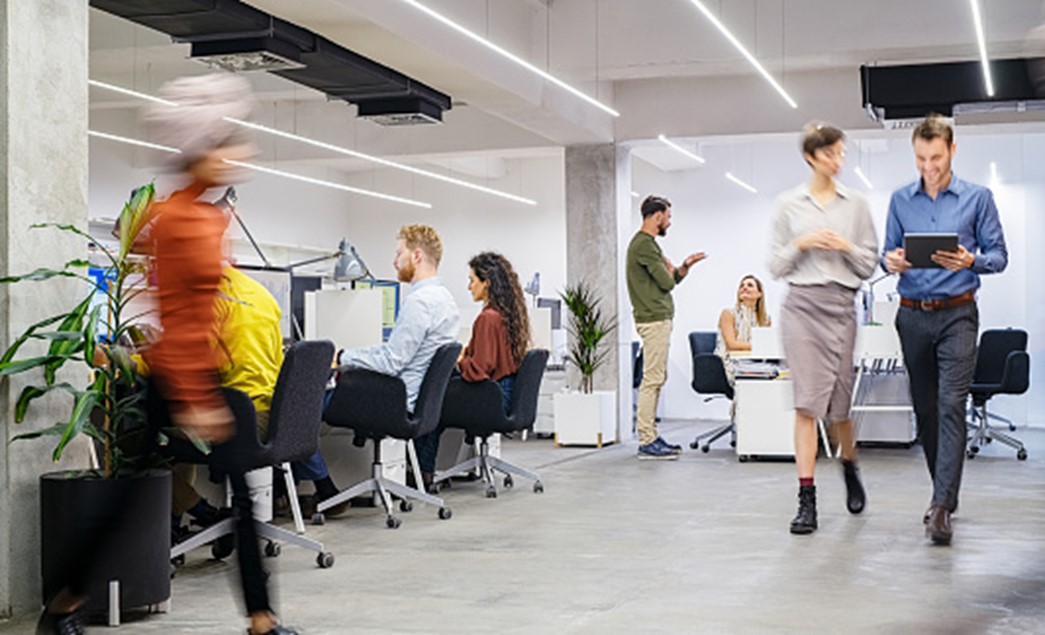
What did the review find?
The headline finding is both encouraging and sobering.
Many workplace interventions successfully reduce sitting time or increase light-intensity movement. However, no intervention consistently increased moderate-to-vigorous physical activity, the type of activity associated with the greatest health benefits.
This distinction matters. Simply replacing sitting with standing is not the same as replacing sitting with walking or more vigorous movement. Ideally, we are incorporating a range of activities across a range of intensities into our workday.
The strongest evidence: sit-to-stand workstations
Among all intervention types, sit-to-stand desks emerged as the clear winner for reducing sedentary time.
The review found that sit-to-stand workstations reduced workplace sitting by approximately 75 minutes per workday. When combined with behavioural support strategies such as goal setting, coaching, or counselling, reductions were even greater.
However, there was an important catch: these interventions generally did not increase physical activity. People stood more, but they did not necessarily move more.
This finding aligns with previous reviews showing that activity-permissive workstations are highly effective for reducing sitting but have limited impact on overall activity levels.

If you want more movement, behavioural strategies matter
While sit-to-stand desks were best for reducing sitting, the most successful interventions for increasing movement combined self-monitoring with behavioural support.
Employees who tracked their activity and received additional support, such as goal setting, coaching, feedback, or motivational strategies, increased their daily steps by an average of more than 1,000 steps per day.
This finding is consistent with broader behaviour change research. A meta-analysis by Vetrovsky and colleagues found that self-monitoring interventions are considerably more effective when paired with additional behaviour change techniques rather than being used alone.
The message is clear: technology by itself is rarely enough. Activity trackers work best when embedded within a supportive behaviour change program.

The social side of movement matters more than we sometimes think
Another noteworthy finding was the effectiveness of interventions that combined self-monitoring with social or interpersonal strategies.
Workplace challenges, friendly competitions, peer comparison, and gamified activity programs showed promising effects on step counts and overall activity.
This echoes evidence from a broader meta-analysis of gamification interventions, which concluded that thoughtfully designed game elements can increase physical activity across a range of populations.
For workplace practitioners, this suggests that social support and shared experiences may be just as important as providing activity opportunities.
What does this mean for BeUpstanding?
The findings are particularly relevant to BeUpstanding.
BeUpstanding is grounded in behaviour change principles and focuses on creating workplace cultures that support less sitting and more movement throughout the day. The new review reinforces a core principle underpinning the program: environmental change alone is rarely sufficient. Sustainable improvements occur when environmental supports are paired with social, organisational, and behavioural strategies.
The review also highlights that reducing sitting remains an important and worthwhile goal.
While increasing MVPA remains challenging, replacing prolonged sitting with standing and light movement still delivers measurable health benefits. Research led by Ekelund and colleagues has shown that both light activity and MVPA contribute to lower mortality risk, and that greater activity can help offset some of the risks associated with prolonged sedentary behaviour.
Where do we go from here?
Perhaps the most important lesson from this review is that workplace health should not frame success as simply “sitting less.” The future challenge is helping workers move more and move often.
The strongest evidence currently supports:
- Sit-to-stand workstations for reducing sedentary time.
- Self-monitoring combined with behavioural support for increasing daily movement.
- Gamified and socially supported approaches for encouraging activity.
- Multi-component interventions that combine environmental, behavioural, and organisational strategies.
At the same time, we need more research focused on increasing moderate-to-vigorous physical activity within the realities of modern work. As remote and hybrid work arrangements continue to evolve, finding practical and scalable ways to build meaningful movement into the workday remains an important research and practice priority.

Tips for embedding more movement
You don’t need a gym session to be more active at work. Small bursts of movement can help break up sedentary time and add movement throughout the day.
Try:
- Visiting a colleague instead of sending an email or Teams message.
- Taking a “lap while you think” before or after a meeting.
- Going the long way to the kitchen, printer or bathroom.
- Doing simple resistance activities like squats, calf raises or stretches while waiting for the kettle to boil.
- Creating a team habit of moving between meetings rather than sitting still through back-to-back sessions.
The key is to look for opportunities to move during tasks you’re already doing, rather than finding extra time in the day.




Comments are closed.