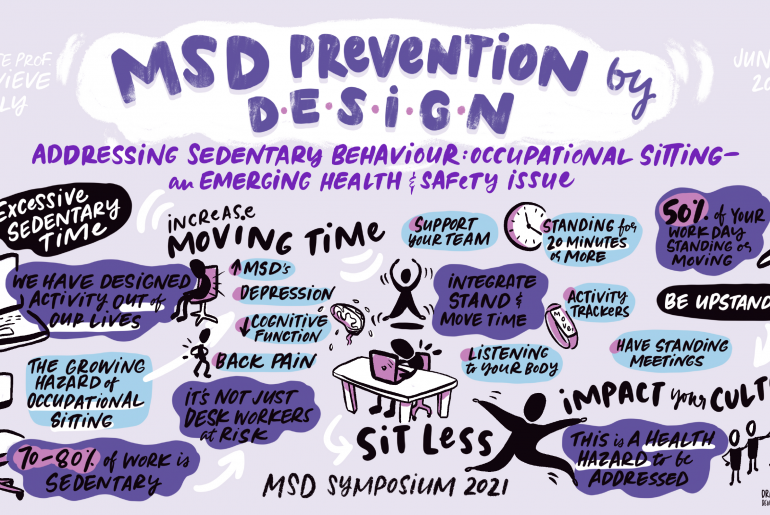
Lower back pain (LBP) is one of the greatest causes of years lived with a disability worldwide. For office workers, the problem is particularly acute, with up to 83% experiencing LBP over a 12-month period. We know that prolonged sitting and prolonged standing are both associated with LBP. This is why sit-stand desks have become a popular strategy to introduce postural variation and break up long bouts of sitting. But if you already have a sit-stand desk, how often should you actually switch positions? Is there an ideal ratio of sitting to standing? A recent randomised trial explored this exact question, comparing a fixed, prescribed ratio of sitting and standing against a personalised, flexible approach for desk-based workers already experiencing LBP. What did they do? Researchers recruited 56 desk-based workers experiencing LBP and randomised them into two groups for a three-month intervention. Fixed Ratio Group (30:15): Participants were instructed to alternate their posture every 45 minutes, spending 30 minutes sitting and 15 minutes standing. They used a phone app or timer to prompt them when to switch. Personalised Ratio Group: Participants and a physiotherapist collaboratively determined a ratio using an ‘activity pacing’ approach. This meant selecting sitting and standing times…