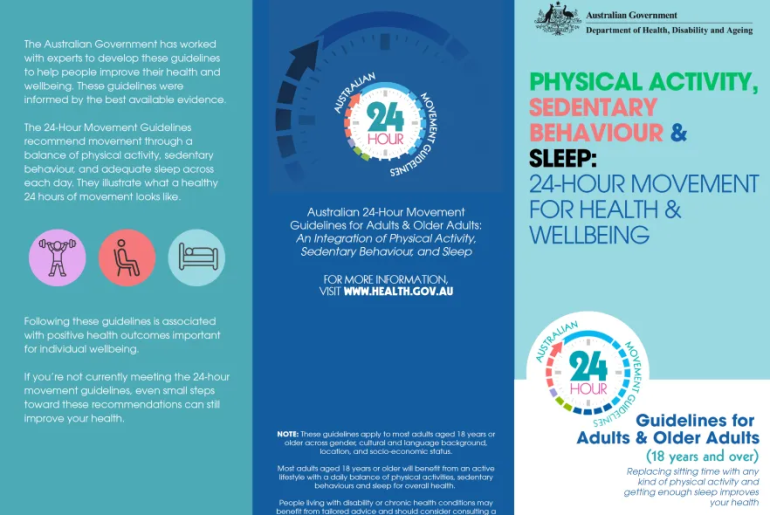
Stand up. Sit less. Move more. It sounds simple, but the new Australian 24-hour movement guidelines show why this message matters. Good health is not only shaped by planned exercise or regular weekend workouts. It is shaped by how we spend the whole day. For workplaces, this is an opportunity to rethink everyday routines and make small, practical changes that help people sit less, move more, and feel better. The problem with the “mostly sitting” workday For many Australian workers, the workday is built around sitting. We sit to check emails, attend meetings, write reports, join video calls, travel between sites, and even sit to take breaks. Before we know it, hours have passed with very little movement. This matters because sedentary behaviour is not simply the absence of exercise. It refers to waking behaviours done while sitting, reclining, or lying down, with very low energy use. Long periods of uninterrupted sitting can have negative short and long term health impacts, even for people who are physically active outside work. The new 24-hour movement guidelines help make this clearer: health is shaped by the balance of movement, sitting, and sleep across the whole day. What are the new 24-hour movement guidelines?…