As a BeUpstanding champion, you will be leading your organisation in forming healthier habits and creating a dynamic workplace culture; but it’s no secret that taking on new leadership roles like this one can be daunting, especially if you feel as though you don’t fit the bill. Recent research suggests that just having self-doubt about your successes and leadership abilities may in turn stifle them. Findings from a study on the consequences of imposter feelings and self-doubt showed that they negatively impacted students’ ability to career plan and strive, and decreased motivation to lead in a professional working environment. Previous and more traditional psychology theories of leadership might perpetuate these imposter feelings by focusing on the “innate” qualities that all great leaders have, or a prescribed reward and punishment system that all great leaders use. For example, the Great Man theory of leadership is the idea that “leaders are born and not made”, possessing inherited qualities which make them better suited to lead (i.e. confidence or assertiveness). Transactional leadership theory, on the other hand, asserts that great leadership is determined by one’s ability to set expectations and enforce them with the effective use of rewards and punishments. These theories are…
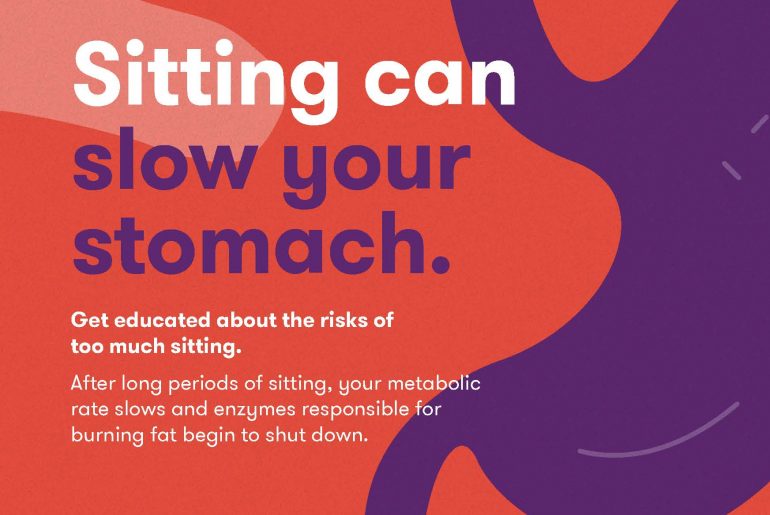
Sitting can slow your stomach – Part 1
Have you ever experienced stomach pains, discomfort, or indigestion after sitting too long at your desk? While exercise has long been anecdotally thought to influence digestion, more recent research has been exploring the impact of physical inactivity on digestion. This post will explore some ways exercise and inactivity influences your gut, as well as the implications for your health. But first, what does it mean to say that sitting “slows your stomach?” One way to consider it would be gastric emptying, or the movement of stomach contents into the small intestine (how quickly food leaves the stomach). Another possibility is gastrointestinal transit time, which is the time it takes something you eat to move from your mouth through your entire gastrointestinal tract. Both these definitions have been linked to physical activity and inactivity, as have health outcomes such as constipation and colorectal cancer. How physical inactivity slows your stomach: When you aren’t moving, your gut isn’t moving much either. An extreme example can be seen in people who are confined to bed or held immobile. Hospital inpatients are another population at risk of prolonged physical inactivity, and increased rates of constipation are seen in this population. However it can be…
An Exercise Regimen Everyone Can Squeeze In
The following article was written by Emmanuel Stamatakis and published in The Conversation on the 21st February 2019. Have you recently carried heavy shopping bags up a few flights of stairs? Or run the last 100 metres to the station to catch your train? If you have, you may have unknowingly been doing a style of exercise called high-intensity incidental physical activity. Our paper, published today in the British Journal of Sports Medicine, shows this type of regular, incidental activity that gets you huffing and puffing is likely to produce health benefits, even if you do it in 30-second bursts, spread over the day. In fact, incorporating more high intensity activity into our daily routines – whether that’s by vacuuming the carpet with vigour or walking uphill to buy your lunch – could be the key to helping all of us get some high quality exercise each day. And that includes people who are overweight and unfit. What is high intensity exercise? Until recently, most health authorities prescribed activity lasting for at least ten continuous minutes, although there was no credible scientific evidence behind this. This recommendation was recently refuted by the 2018 US Physical Activity Guidelines Advisory Report. The new…
Six Strategies For Sitting Less
Six Strategies for Sitting Less Scratching your head on how your team can BeUpstanding? A recent study by Hadgraft and colleagues and published in the journal BMC Public Health, explored office workers attitudes around reducing workplace sitting. They also sought out workers opinions on a variety of strategies aimed at reducing occupational sitting, which were commonly identified from previous workplace interventions, and their perceived barriers to achieving this in the workplace. A number of strategies were viewed as acceptable and likely to be adopted by workers with some of the strategies addressing multiple influences on sitting and catering to a range of different jobs and preferences. Why not give some of the strategies a try in your workplace! Make use of standing meeting. Sick of sitting through endless meetings? Look to change it up by changing your posture. A standing meeting can be used for a quick check in with the team, while putting stand and stretch breaks into the agenda can help your team reset and refocus. Why not step it up by having a walking meeting for those one-on-one catch ups! Communicating face-to-face. Whenever there’s a short message to be conveyed to a co-worker, employees can tell the…
What Makes A Good Champion?
Are you interested in becoming a workplace champion? Maybe you are looking for someone to assume this role in your workplace but you are unsure where to start. You might ask yourself what makes a ‘good’ workplace champion? Previous research suggests that the most effective workplace champions are those who have a genuine passion for health and wellbeing and are enthusiastic about the opportunity to inspire others towards a healthier lifestyle (Healy et al., 2018). They must also be committed to making long-term positive health changes in their workplace and display a good relationship with their peers. It could be someone that has, or is eager to gain, some experience in managing similar projects. Health and safety representatives are often chosen for this position because it coincides with their goals, namely to create a safer, healthier workplace. However, we must also consider the individual’s capacity to adopt this role. Do they have the time and resources to engage fully with the program within the confines of their own job? Or will it fall into their periphery? These are just a few of the things that must be considered before electing a workplace champion. More general personality traits like outgoingness and…
“Research commercialisation: Tips for starting your journey”
The following article, written by Matt Frith – one of our BeUpstanding™ team members, and managing director and founder of Kin8 – was originally published in The Research Whisperer on May 29, 2018. Research commercialisation can be daunting, but in a landscape of dwindling government funding and ever-shifting technological and commercial realities, it can be a powerful way to bring new ideas and change into the world. For researchers and academics, however, the businesses, people and language can be so different that it’s almost alien. The way a researcher or academic thinks, the goals they have to achieve in their career, are very different to those of a corporate department’s director or CEO. So, how do you begin to feel comfortable exploring the world of research commercialisation? For this post, we’ve put together some detailed tips, based on our experience working with both researchers and corporate partners. The biggest barriers are often emotional, so these tips are designed to get you both thinking and feeling, along with actions, to start your path forward. You have value. We can tell you right now that someone in the corporate sector values what you are doing and what you have. You have intellectual property, processes, team members,…
You should stand in meetings – don’t worry about what others might think
The following article, written by Benjamin Gardner, Lee Smith, and Louise Mansfield, was originally published in The Conversation on July 2, 2018. Standing in meetings may be good for our health, but it can also make those that are standing feel self-conscious, anxious about how others perceive them, and disengaged from the meeting. These findings, taken from our recent study, suggest that efforts to encourage office workers to sit less and move more must acknowledge the realities of the workplace that conspire to keep people chained to their seats. Sitting has been linked to adverse health outcomes, including increased risk of obesity, heart disease, some cancers, and poorer mental health. While some evidence suggests that the harms of sitting can be offset by at least one daily hour of moderate physical activity, this seems an unrealistic target. Most of the UK population fails to meet physical activity recommendations and spends prolonged periods sitting. Office workers, who make up half of the UK workforce, are particularly inactive. Our 2015 study of 164 London workers found that, on workdays, they sat for 10.5 hours of the 16 hours they spent awake. Breaking up sitting frequently with periods of standing and associated light activity can have important health…
Moving More During Your Commute
With BeUpstanding™, we’re always trying to incorporate ways to stand up, sit less, and move more throughout the day. While we often think about sitting less in the workplace, another time to reduce sitting is on the way to the workplace. Around 78% of Australians commute by car. Sitting in the car can lead to negative health outcomes especially with longer commutes. Commuting distance is associated with increased body fat and decreased fitness level. Active commuting (walking or cycling) on the other hand, is associated with a greater fitness level, healthier body weight, and a decreased risk for heart disease. We can all think of some barriers to active commuting. However, there are easy steps to overcome these barriers. For example, you don’t have to walk to work all the way from home. Instead, get off the bus a stop or two early and walk the rest of the way. You can also try parking further from the office to increase your step count. Cycling can seem intimidating thanks to hills along your commute route. Electric assist e-bikes can help. These bikes provide motor assistance when you pedal so that it feels like you’re always riding with the wind at…
Quick Tip – Water Bottle Replacement
Are you looking for ways to move more at work? Here’s one of our favourite tips to get you out of your seat and onto your feet. Replace your water bottle with a glass! This simple strategy forces you to stand up and walk to fill your glass every time it is empty. In addition, this is helpful because it helps remind you to drink enough water which is also important for your health. The most sustainable strategies are sometimes ones that will easily become part of your daily routine. An empty glass on your desk is a subtle reminder to stand up often. We hope this simple tip will have you up and moving about without even thinking about it. Happy moving!
Motivational Email Tips
Stuck for ideas? Are you looking for email tips to motivate your team to stand up, sit less, and move more? If so, read on because we have some topic ideas and tips to help you keep your team excited! Colors, images, tone of voice, and content can all be used to make your emails motivational. If you already have an idea of what will motivate your team, go for it! The suggestions below are simply some topic ideas that you are welcome to use. Current events To keep your emails engaging and relevant, try to tie current events into the theme of your email. You can do this by mentioning seasons, holidays, or sporting events! For example, you could use the Commonwealth Games as motivation: “Inspired by the Commonwealth games? Consider trying a new activity or revisiting one you used to play. Maybe you could try a race walk to your next meeting! You don’t need to be training for Birmingham 2022 to get the benefits out of sitting less and moving more.” Activity outside of work Now that staff are getting used to more activity at work, this is a good opportunity to encourage physical activity out of office hours. Activity outside of work can include moderate…