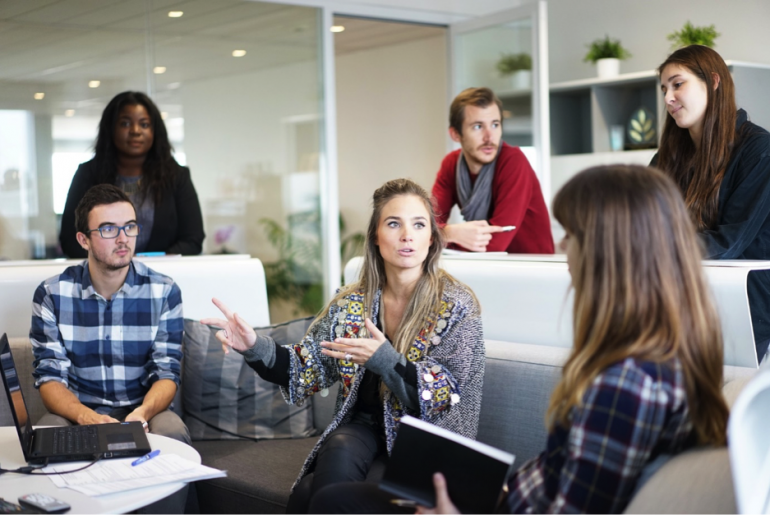
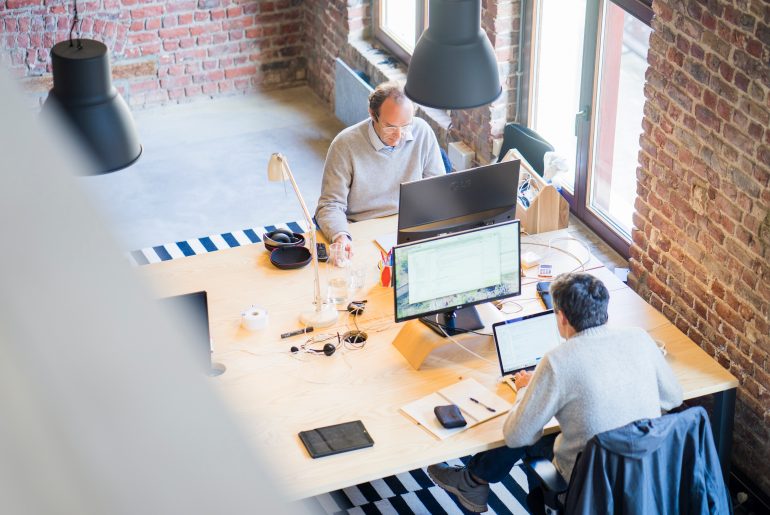
A critical part of the BeUpstanding program is choosing three strategies as a team to BeUpstanding. Some of our previous blog posts have provided suggestions from the evidence for strategies to sit less and gain momentum for change. But what have our BeUpstanding teams been doing? Below are some of the more common strategies teams have chosen to date. Encourage workers to leave their desks during breaks Move bins, printers/scanners and mailboxes to a central location Have standing meetings Stand and move around when taking a phone call Provide information / maps / distances on convenient walks in and around the office Put height-adjustable desks in a standing position when leaving the desk Put stand and stretch breaks into meeting agendas Other strategies we have heard of teams adopting and think are great are: Stand up and shake it off. This was in a work environment where team members regularly experienced difficult phone calls. By standing up and shaking it off, it not only allowed the individual to experience the benefits of breaking up their sitting time, but also provided a non-verbal signal to other team members to check in. KPI bingo: Here, the team picked a key word (e.g., KPI)…
How to be a Safety Champion
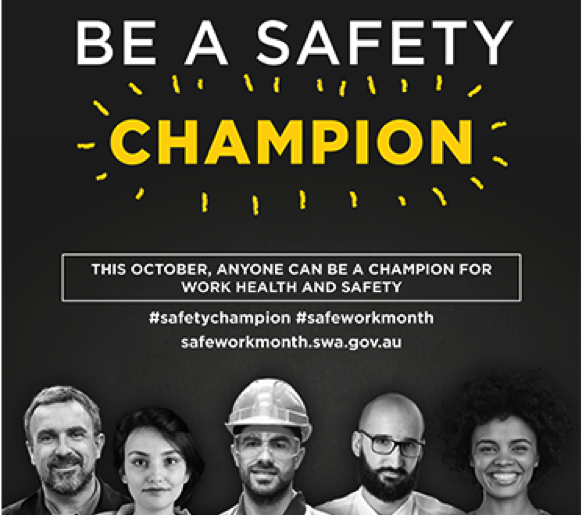
This month is Safe Work Month and the theme is Be a Safety Champion. Comcare hosted a series of regional events to mark Safe Work Month, with BeUpstanding featuring as an exemplar of a program that uses a train-the-champion model. You can download and view the presentations from here. One of the key things to help you be a safety champion is good work design. It is important to consider health and safety issues when designing work as this can help to eliminate hazards and manage risks. Effective design of good work considers: the work work systems the physical working environment the workers. Taking into account these things can help improve performance, job satisfaction and productivity. Take a look the Handbook – Principles of Good Work Design* to learn about the ten principles to good work design. Hierarchy of control The hierarchy of control can help identify ways to eliminate or minimise risks to health and safety. The most effective control is to eliminate the risk. However, if that is not possible, working through the hierarchy helps to find the most effective measure. For sitting less and moving more at work, substitution and redesign strategies could include provide high table options in meeting rooms…
Do move a muscle
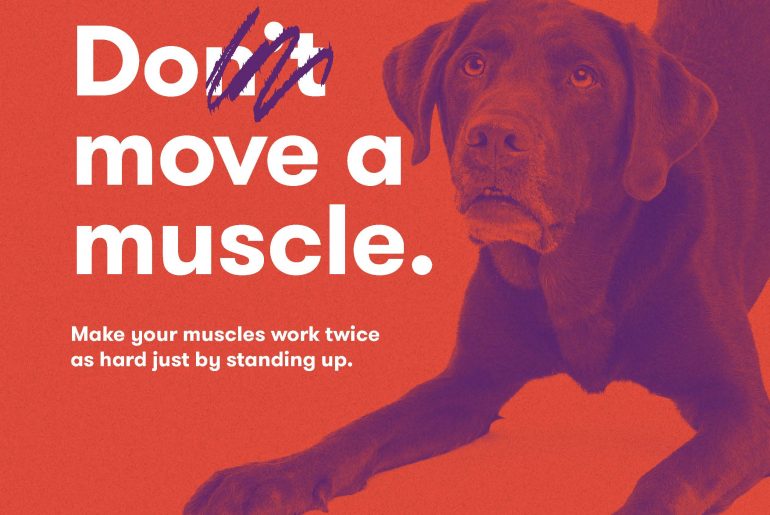
It is hard to imagine too many situations in the office where you would need to freeze and not move a muscle. Hence – our week 4 poster invites BeUpstanding participants to “do move a muscle”, and to do so regularly throughout the day. But what are the benefits of doing this? When we are seated, our large postural muscles in our legs do not have to work very hard. However, just by standing up, muscle activation can increase substantially. For example, one study in 84 middle aged volunteers from Finland were asked to wear special shorts that measured the electromyographic (EMG) or muscle activity of their quadriceps and hamstrings. They were asked to do a number of activities (lying down, standing, sitting, squatting, stair climbing, walking, running) as well as a maximal isometric voluntary contraction (MVC) – a standard test for measuring muscle strength. The EMG activity of each of the tasks was then compared to what the participant achieved during the MVC. When sitting, participants thigh muscles were only activated at about 1% of their maximum. This increased to 2.5% just by standing, about 10-12% by walking, and a substantial 22-25% by squatting or climbing up stairs. In…
Being The Best Champion For Your Workplace: Understanding The Psychology of Leadership
As a BeUpstanding champion, you will be leading your organisation in forming healthier habits and creating a dynamic workplace culture; but it’s no secret that taking on new leadership roles like this one can be daunting, especially if you feel as though you don’t fit the bill. Recent research suggests that just having self-doubt about your successes and leadership abilities may in turn stifle them. Findings from a study on the consequences of imposter feelings and self-doubt showed that they negatively impacted students’ ability to career plan and strive, and decreased motivation to lead in a professional working environment. Previous and more traditional psychology theories of leadership might perpetuate these imposter feelings by focusing on the “innate” qualities that all great leaders have, or a prescribed reward and punishment system that all great leaders use. For example, the Great Man theory of leadership is the idea that “leaders are born and not made”, possessing inherited qualities which make them better suited to lead (i.e. confidence or assertiveness). Transactional leadership theory, on the other hand, asserts that great leadership is determined by one’s ability to set expectations and enforce them with the effective use of rewards and punishments. These theories are…
Sitting can slow your stomach – Part 1
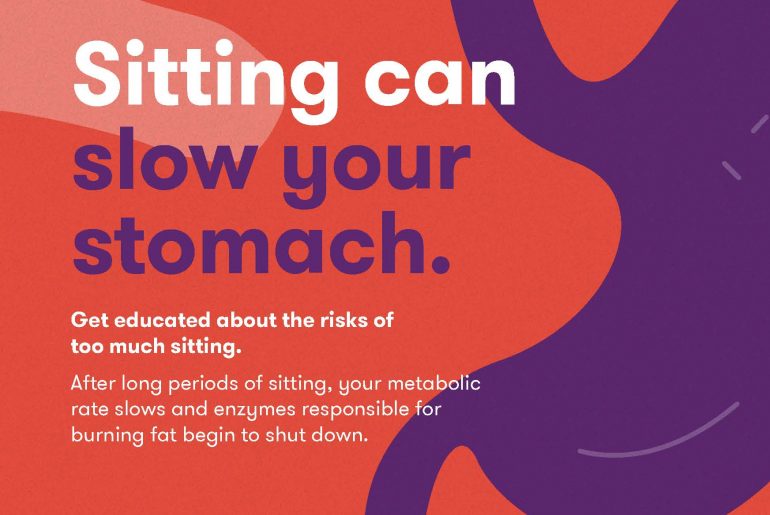
Have you ever experienced stomach pains, discomfort, or indigestion after sitting too long at your desk? While exercise has long been anecdotally thought to influence digestion, more recent research has been exploring the impact of physical inactivity on digestion. This post will explore some ways exercise and inactivity influences your gut, as well as the implications for your health. But first, what does it mean to say that sitting “slows your stomach?” One way to consider it would be gastric emptying, or the movement of stomach contents into the small intestine (how quickly food leaves the stomach). Another possibility is gastrointestinal transit time, which is the time it takes something you eat to move from your mouth through your entire gastrointestinal tract. Both these definitions have been linked to physical activity and inactivity, as have health outcomes such as constipation and colorectal cancer. How physical inactivity slows your stomach: When you aren’t moving, your gut isn’t moving much either. An extreme example can be seen in people who are confined to bed or held immobile. Hospital inpatients are another population at risk of prolonged physical inactivity, and increased rates of constipation are seen in this population. However it can be…
How Can Using a Standing Desk Affect Your Productivity
This article is re-posted from a Sedentary Behaviour Research Network blog post on 3rd July 2019. Recently, research into the topic of excessive sitting, or “sedentary behaviour”, has been making headlines. The risk for chronic diseases, such as diabetes and obesity, that comes with high levels of sitting is becoming more evident (1). Office workers represent a population that spend a significant amount of time in sedentary pursuits as a consequence of their occupation (2). As more research is being published on the topic, many workplaces are seeking non-sedentary alternatives and solutions to the traditional office environment to keep their employees as healthy and productive as possible. One such solution has been the implementation of activity-permissive workstations. Activity-permissive, or alternative, workstations replace a worker’s traditional desk and are broadly categorized into either standing desks or dynamic workstations. Standing desks allow for a worker to stand while performing a task (e.g., typing, clerical work), and can be installed as additions to an existing workstation, or as height-adjustable replacement units (see Figure 1). Dynamic workstations are designed to allow for activity or movement while working, and include a variety of alternative workstations, such as: treadmill desks, cycling desks, and dynamic sitting desks…
“Sit less—move more and more often”: all physical activity is beneficial for longevity
This article was originally published in the BMJ Opinion on 21st August 2019. New research shows that any level of movement decreases risk of premature death, so get moving say Ulf Ekelund and Thomas Yates It is well established that physical activity of a moderate or vigorous intensity (such as brisk walking) is good for your health. More recently, it has also been shown that people in contemporary societies are spending the majority of their day sitting, and that this prolonged sitting is also linked to an increased risk for many chronic diseases and premature death. Current physical activity recommendations, including those recently updated for the US, suggest that at least 150 minutes per week of moderate intensity physical activity is needed to keep healthy and that prolonged sitting should be avoided. However, how much sitting is too much? This is not specified and is widely debated. In addition, are levels of physical activity below those recommended still beneficial for health and does light intensity physical activity still count? Answering these questions have huge relevance for health promotion. We performed a study to address these questions. Our results suggest strong associations between total physical activity and the risk of dying.…
Why Some Employers Are Paying Their Employees to Exercise
This article written by Katie MacAskill was originally published on 31 July 2019 on The Sedentary Behaviour Research Network (SBRN) website. Exercising has been proven over and over again to benefit physical and mental health. In the context of the workplace, countless researchers have seen improvements in employee time management, productivity, focus, personability and more from exercise interventions. As part of their “Power of the Hour” series, a BBC article was published earlier this year on exercise breaks during the workday. The article references a variety of professionals, employers and employees to discuss the values of exercise breaks, noting that some offices even pay their employees to exercise. In recent years, an increasing number of offices are finding and setting up headquarters with a gym or workout studio available in the building. Employees in such offices who make use of these facilities are more productive and tend to leave the office more satisfied with their performance at the end of the day; not to mention the regular benefits that physical activity has on health including immediate cognitive boosts. Setting up big tables and cafes as work spaces in view of treadmills/ellipticals or gym spaces is a new idea companies are…
An Exercise Regimen Everyone Can Squeeze In
The following article was written by Emmanuel Stamatakis and published in The Conversation on the 21st February 2019. Have you recently carried heavy shopping bags up a few flights of stairs? Or run the last 100 metres to the station to catch your train? If you have, you may have unknowingly been doing a style of exercise called high-intensity incidental physical activity. Our paper, published today in the British Journal of Sports Medicine, shows this type of regular, incidental activity that gets you huffing and puffing is likely to produce health benefits, even if you do it in 30-second bursts, spread over the day. In fact, incorporating more high intensity activity into our daily routines – whether that’s by vacuuming the carpet with vigour or walking uphill to buy your lunch – could be the key to helping all of us get some high quality exercise each day. And that includes people who are overweight and unfit. What is high intensity exercise? Until recently, most health authorities prescribed activity lasting for at least ten continuous minutes, although there was no credible scientific evidence behind this. This recommendation was recently refuted by the 2018 US Physical Activity Guidelines Advisory Report. The new…
How Age and Prolonged Sitting Can Effect Spine Stiffness, Postures and Discomfort
Recent research by Gruevski K and Callaghan J, and published in Ergonomics on 19th April 2019, looked at the effect of age and sex on passive spine stiffness, postures and discomfort in response to seated work. They noted that understanding age-specific postures and pain development patterns during sitting exposures are particularly relevant given the ageing working population in industrialised nations. Participants were in their Late 20s to early 30s or early 60’s were asked to sit continuously for 90 min while typing. Their results showed that older adults had higher passive spine stiffness and sat with less flexion during prolonged sitting. Discomfort was higher among older adults and occurred earlier in the simulation compared to younger participants, indicating that interventions, such as walking breaks may need to be implemented earlier during sitting for aged workers. Click here to read the full article